Walking in Pigeon's Path
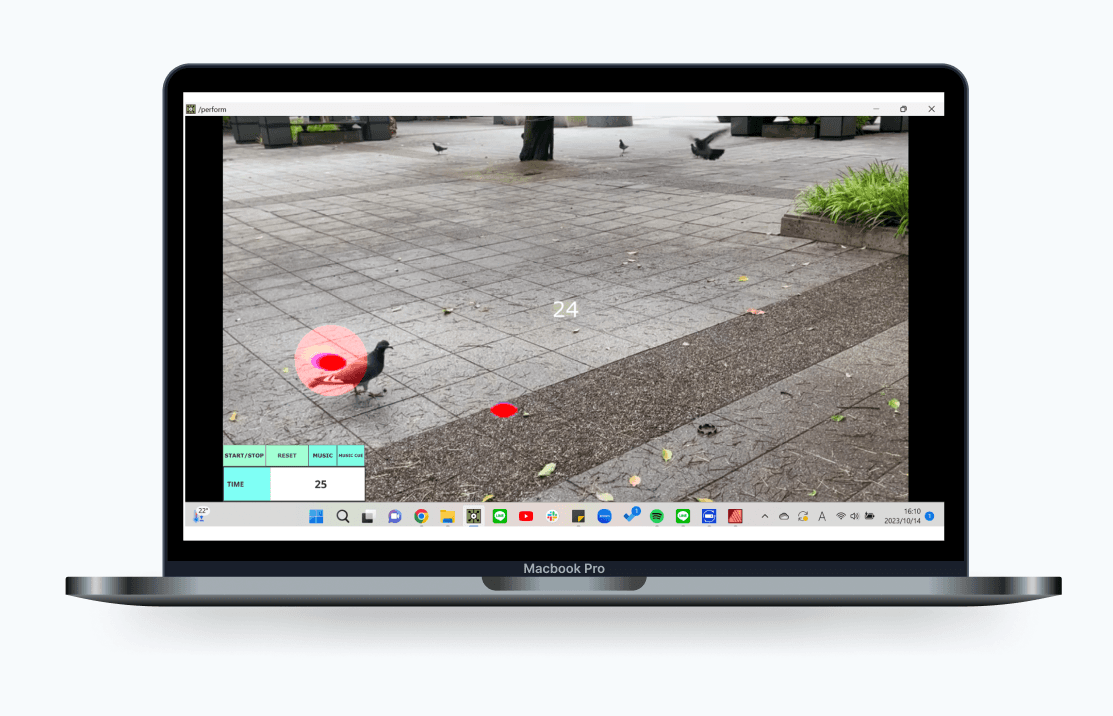
An interactive interface that encourages people to reflect on the behaviors and emotions of pigeons, inviting them to think and act like a pigeon.
Type
Interaction design, Individual project
Tech
Motion tracking (TouchDesigner)
Process / Details
01.
Prompt
How can humans be encouraged to reflect on coexistence with familiar animals in their daily lives?
This project was created in response to a prompt from the Royal College of Art's MA Information Experience Design summer school, which called for a work exploring co-existence with non-human beings using TouchDesigner. I chose pigeons as my subject—creatures we often see but know little about—and began my observations.
02.
User Interview
How do people perceive pigeons, consciously and unconsciously?

Persona1: Pigeon Lover
Saki, Age 65
I like observing pigeons. I observe them on sunny days at parks, but I can't name their features about their behavior. During the interview, I realized I feel a bit uncomfortable when they come close to me.

Persona 2: Pigeon Neutral
Ami, Age 22

Persona 3: Pigeon Hater
Keita, Age 24
I hate pigeons. I think it's because they seem dirty. If just seeing from distance, I think it could be okay for me.
Key Takeaways
1: Regardless of their self-perceived feelings toward pigeons, people generally tend to dislike being in close proximity to them.
2: While people may feel that they frequently see pigeons, they do not actively observe or attempt to understand their behavior.
Design decision
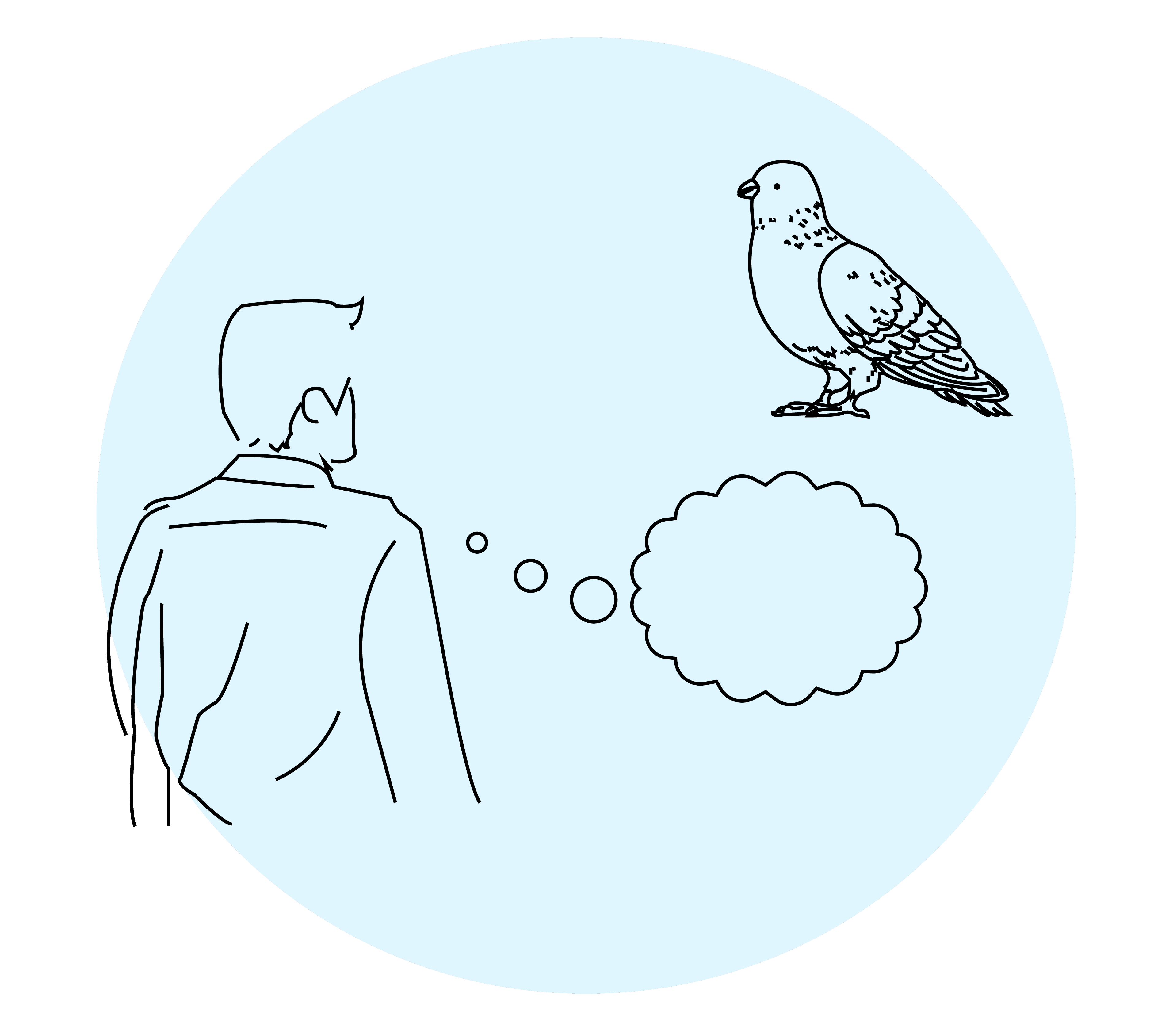
I decided to take a mild approach by encouraging people to imagine a pigeon’s perspective while keeping a comfortable distance from them.
Given that even pigeon lover tend to keep a certain distance from them, taking a radical approach might backfire and only heighten people's aversion.
03.
Observation
How do pigeons experience the world?
I observed pigeons in the local park 3 times a day for a week.
330-degree view
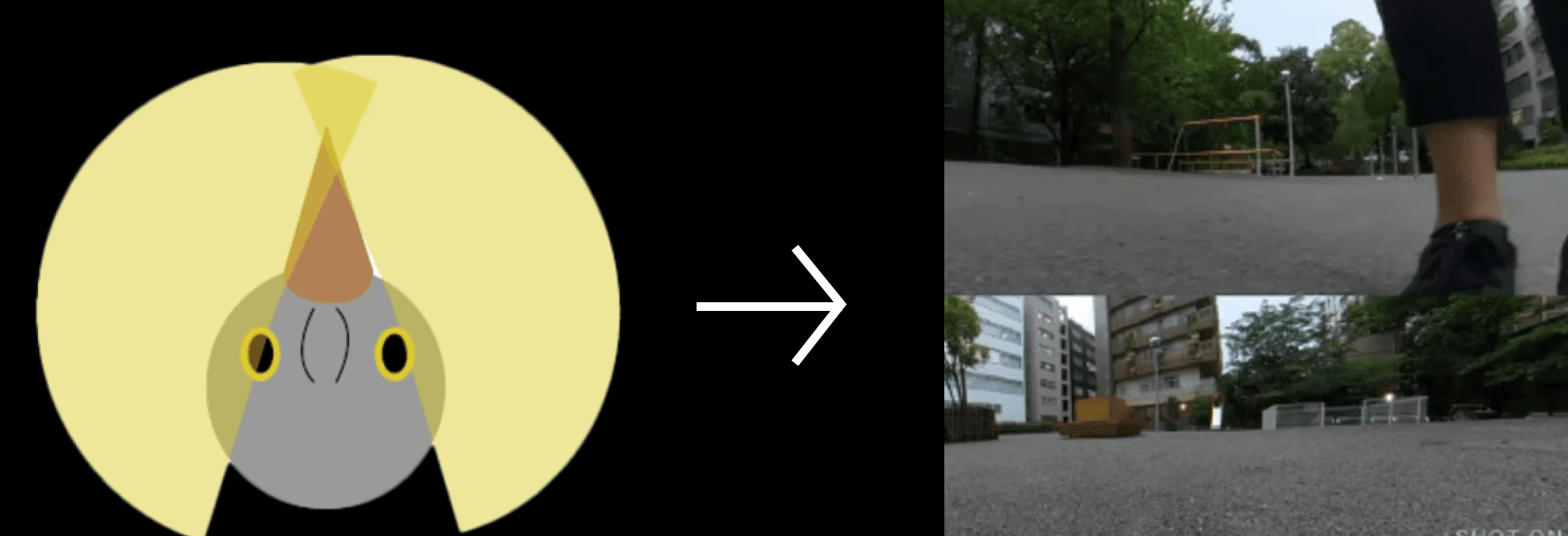
Since pigeons have a 330-degree field of vision, I used a 360-degree camera at pigeon-eye level to film a park-view to experience their view.
See UV light
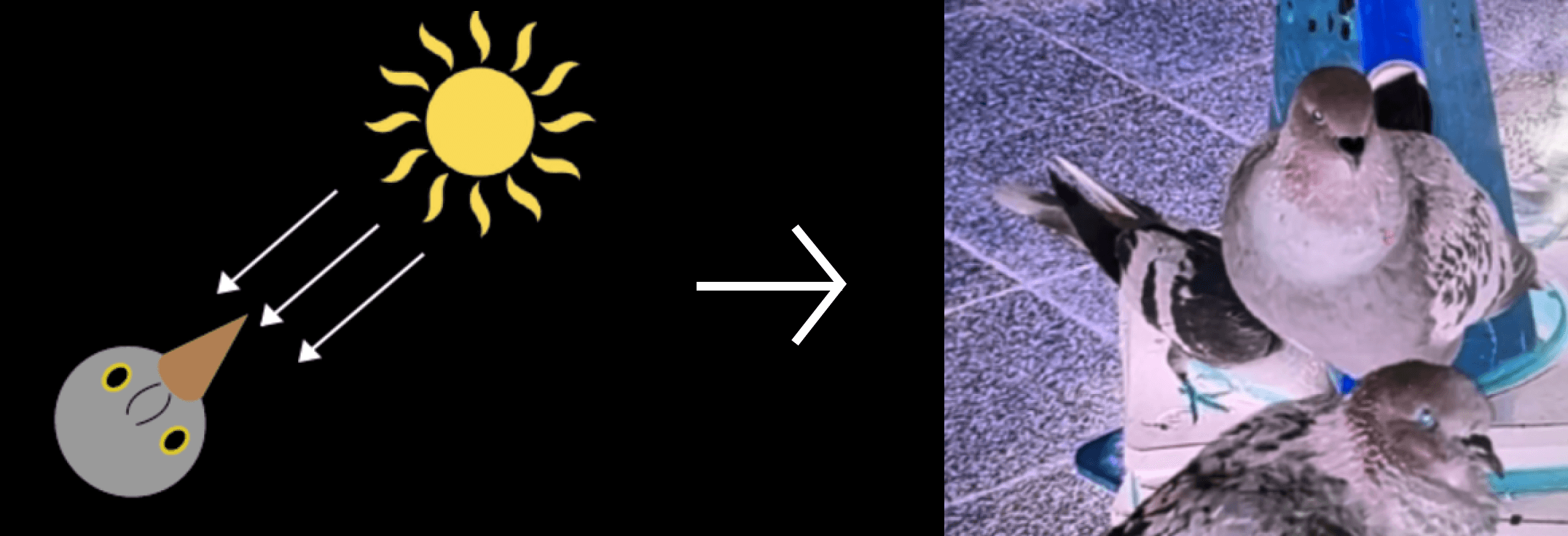
Since pigeons can see ultraviolet light, I used a UV camera to observe how pigeons perceive their peers and surroundings.
How do pigeons interact socially?
I recorded the pigeons' movements, finding their social behavior.
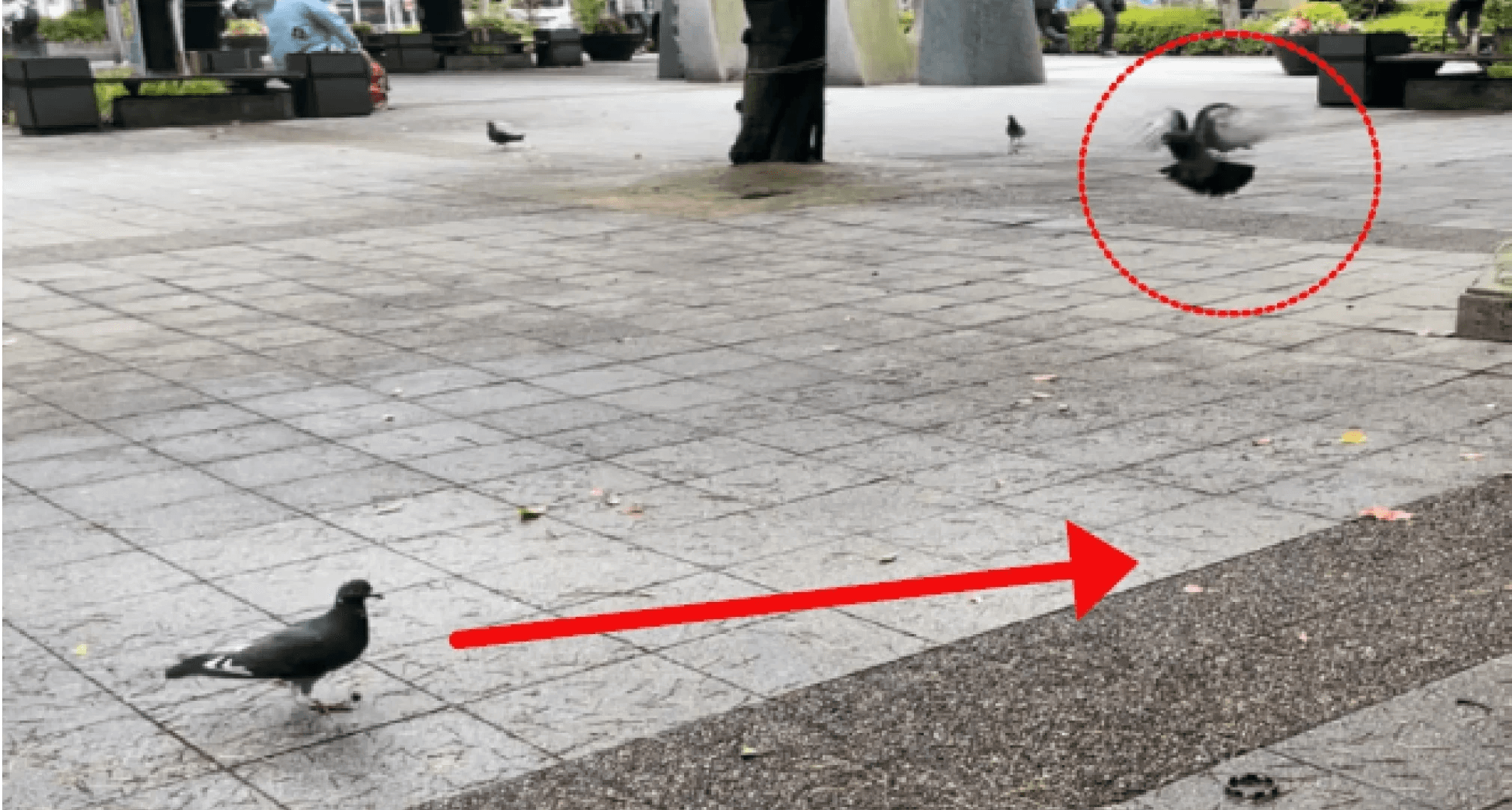
The Pigeon in hte foreground is originally walking to the right
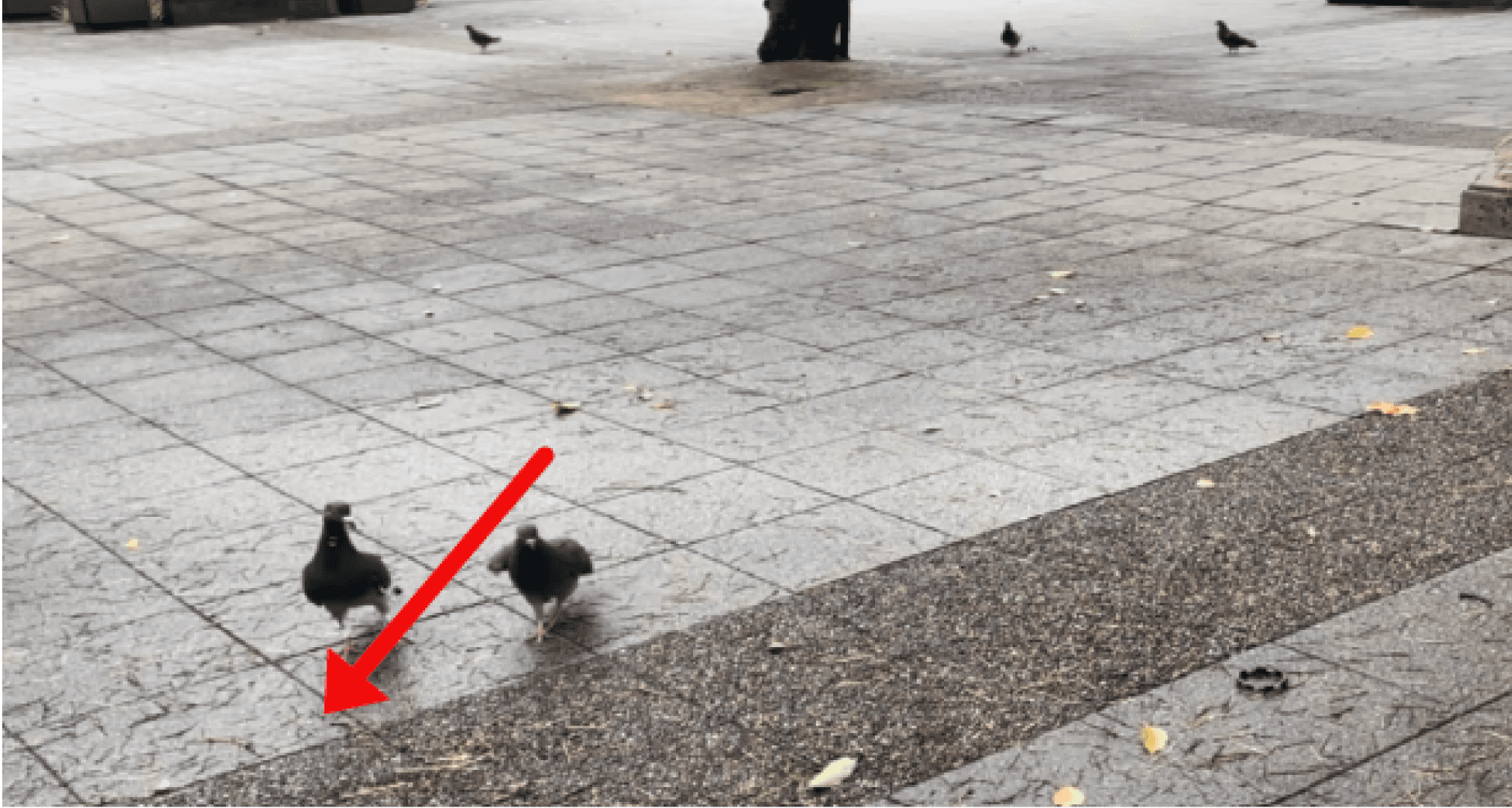
Adjusting its course to align with the pigeon flying in from the back
04.
Design Iterations
What kinds of playful interactions could foster empathy for pigeons while maintaining a certain distance?

Pigeons’ view are totally different from ours, making it difficult for us to relate.
Then, can people empathize with the social behavior of pigeons since “following others” is similar to our behavior?
Design decision
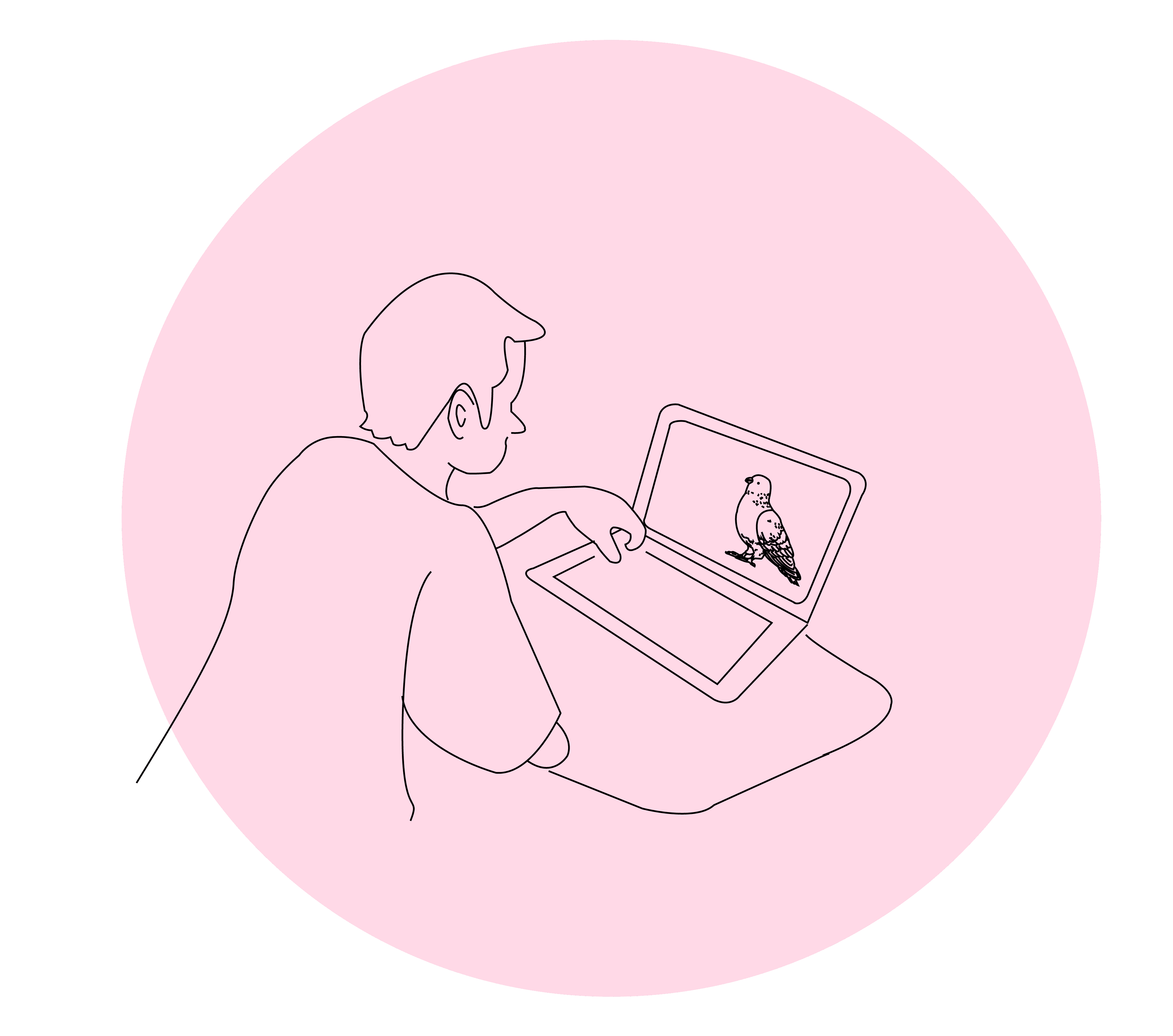
I decided to create an intuitive sound-based game where players predict pigeon movements,with different sounds indicating whether their predictions are correct, to help people intuitively understand pigeon’s social behaviors
05.
User Test
Using Zoom’s annotation feature, I asked ~15 testers to draw their predictions of a pigeon’s path on the screen. Then, I played a video showing the actual path the pigeon took. (without using TouchDesigner or any technologies)
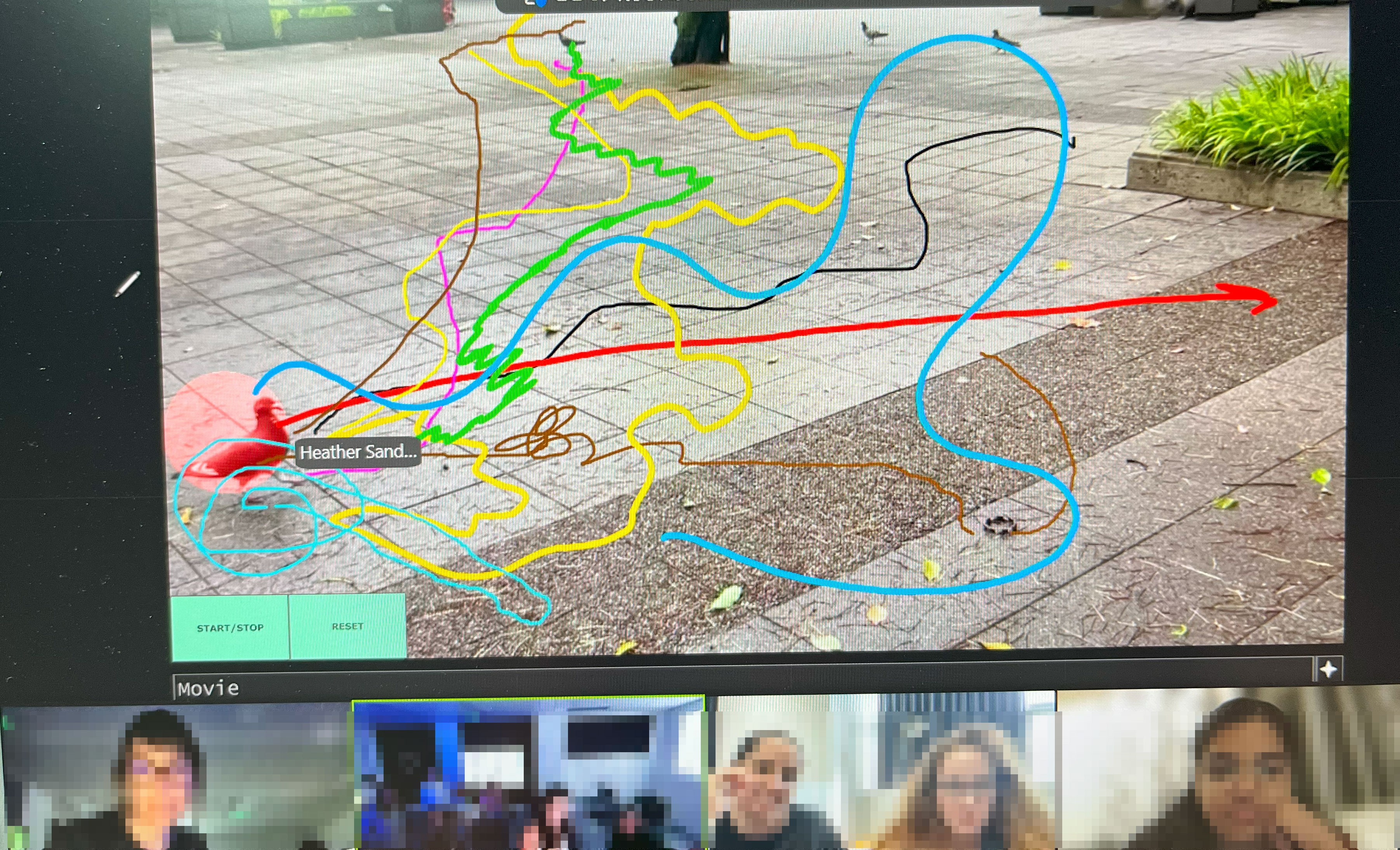
Testers focused on if their prediction (drawn lines) are similar to the actual path the pigeon took.
Testers also showed interests in the pigeon's social behavior, saying that "The pigeon went somewhere completely different from what I predicted! Sometimes they move socially―that's very interesting!"
06.
Iteration After the User Test
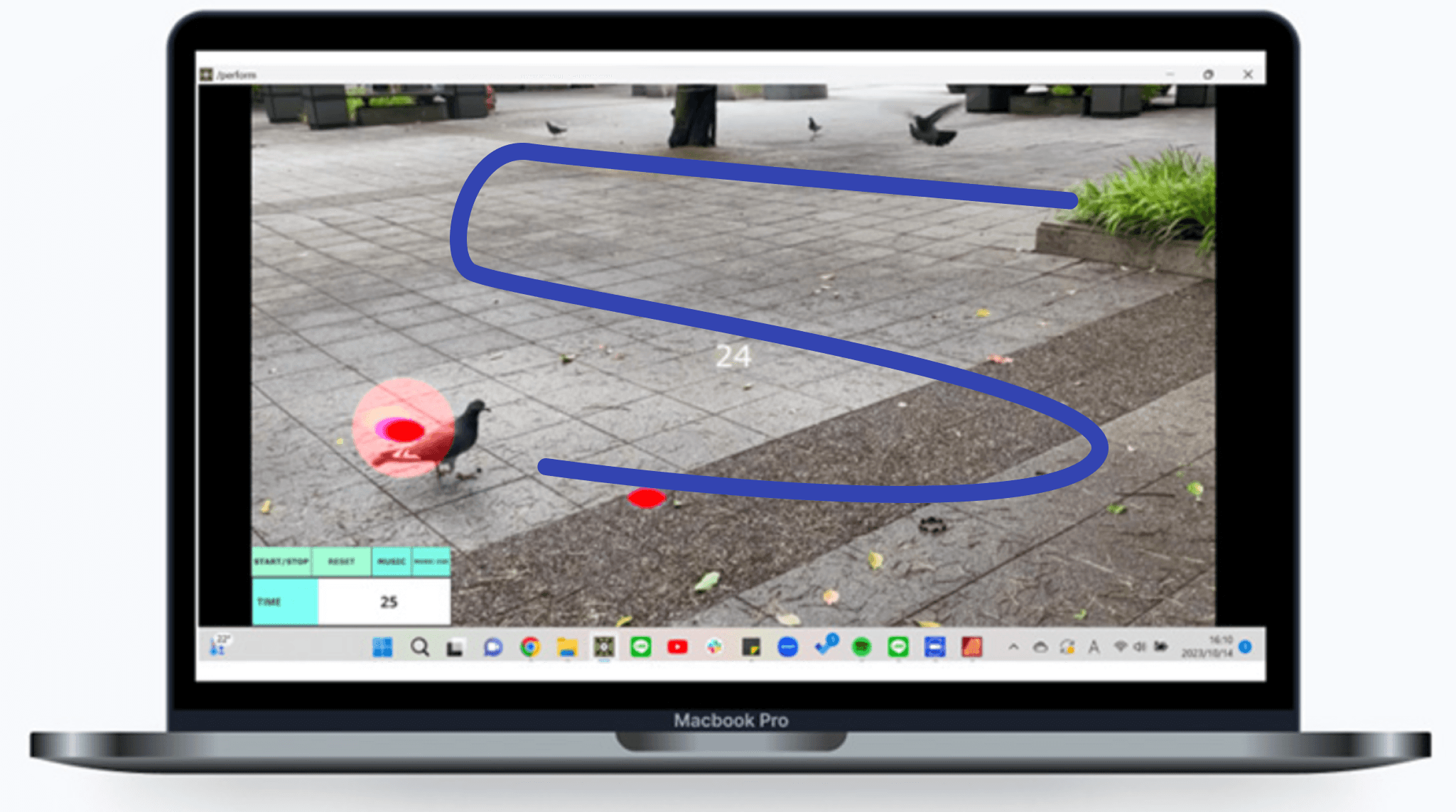
Initially, I didn't plan to leave the path user drew when they are seeing the result (the actual path the pigeon takes). However, I realized that uses enjoyed comparing their drawn path and the actual path, so I decided to make drawn path stay visible when they see the answer.
07.
Design
Using TouchDesigner, I created an interaction interface where participants predict a pigeon's path and compare their predicitions with the pigeon's actual path.
Different sounds are used to let them intuitively sense the unexpected difference between their prediction and the pigeon's behavior.
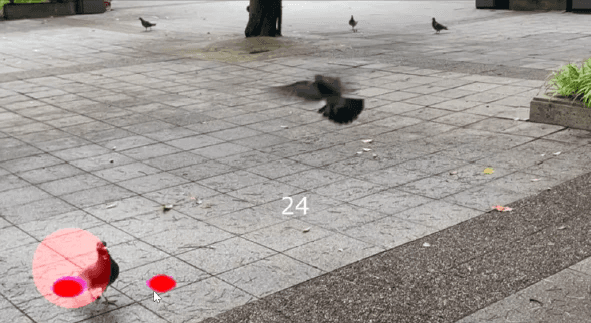
Players hear pleasant sounds when their prediction is close to the actual pigeon’s path
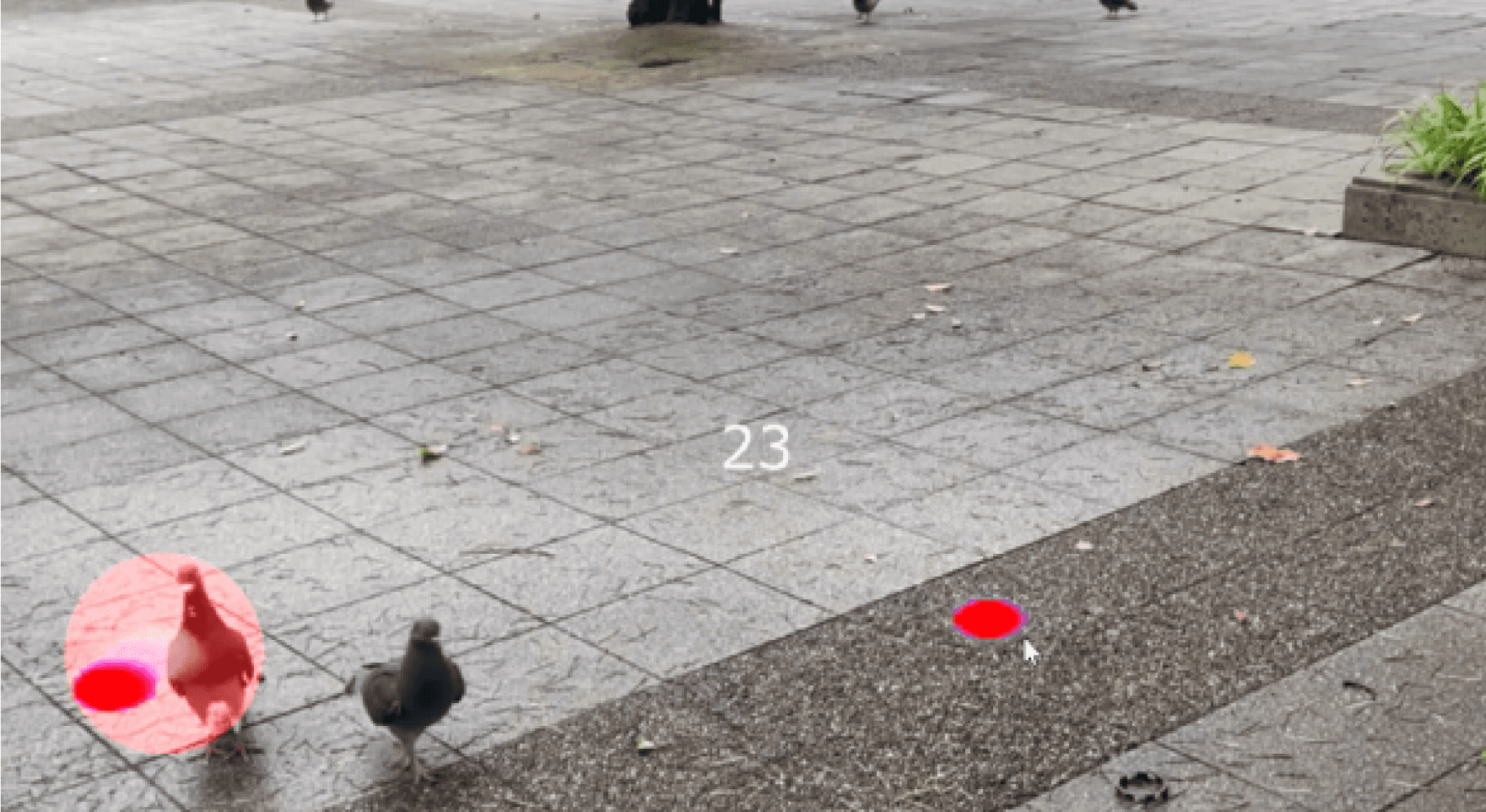
Players can’t hear anything when their prediction is far from actual path
08.
User Feedback
Persona 2: Pigeon Neutral
Ami, Age 22
After playing the game, I found myself observing pigeons at a nearby park.Upon closer look, I noticed them sunbathing on a nice day, and I started to feel they have more relatable traits than I initially thought
Persona 3: Pigeon Hater
Keita, Age 24
I don’t like pigeons, but this was a great opportunity to imagine that their actions might have some reasoning behind them.It could feel easier to empathize with them when I think they might think like I do.
09.
If I had more time ...
I would have conducted user testing with the improved version featuring sound and iterated further. However, due to time constraints, I had to conclude the project at this stage. For future iterations, I would like to create a more engaging group-based competitive game, rather than individual gameplay, similar to the format used in the Zoom session.