Micro Orchestrism
This work interrogates traditional hierarchies of creative expression by positioning fermenting yeasts as musical collaborators
Type
Audiovisual art installation, Interaction design, Group project
Materials/Tech
Sake culture (made of industrial sake lees), Wood, Light projection (TouchDesigner), live sound generation (Pure Data), motion detection (OpenCV, Python)
Awards
Honorary Mention at Ars Electronica Campus Award 2025
The New School Student Research Awards - Grant awarded amongst 150 applicants
William Randolph Hearst Scholarship
Exhibitions
Ars Electronica Festival 2025 Campus Exhibition, Sep 3-7 2025, Linz, Austria
Dutch Design Week 2025, Oct 18 - 26, Eindhoven, Netherlands, at United Cowboys
ACM TEI 2026 Art and Performance, March 8-11, Chicago, USA(Tangible, Embedded, and Embodied Interaction)
Publication
Kaori Ogawa, Kaito Nakahori, and Harpreet Sareen. 2026. Micro Orchestrism: Musical co-creation of human and sake yeast to interrogate creative hierarchy. In Proceedings of the Twentieth International Conference on Tangible, Embedded, and Embodied Interaction (TEI '26), Article 110, 1–4. https://doi.org/10.1145/3731459.3779137
Project description
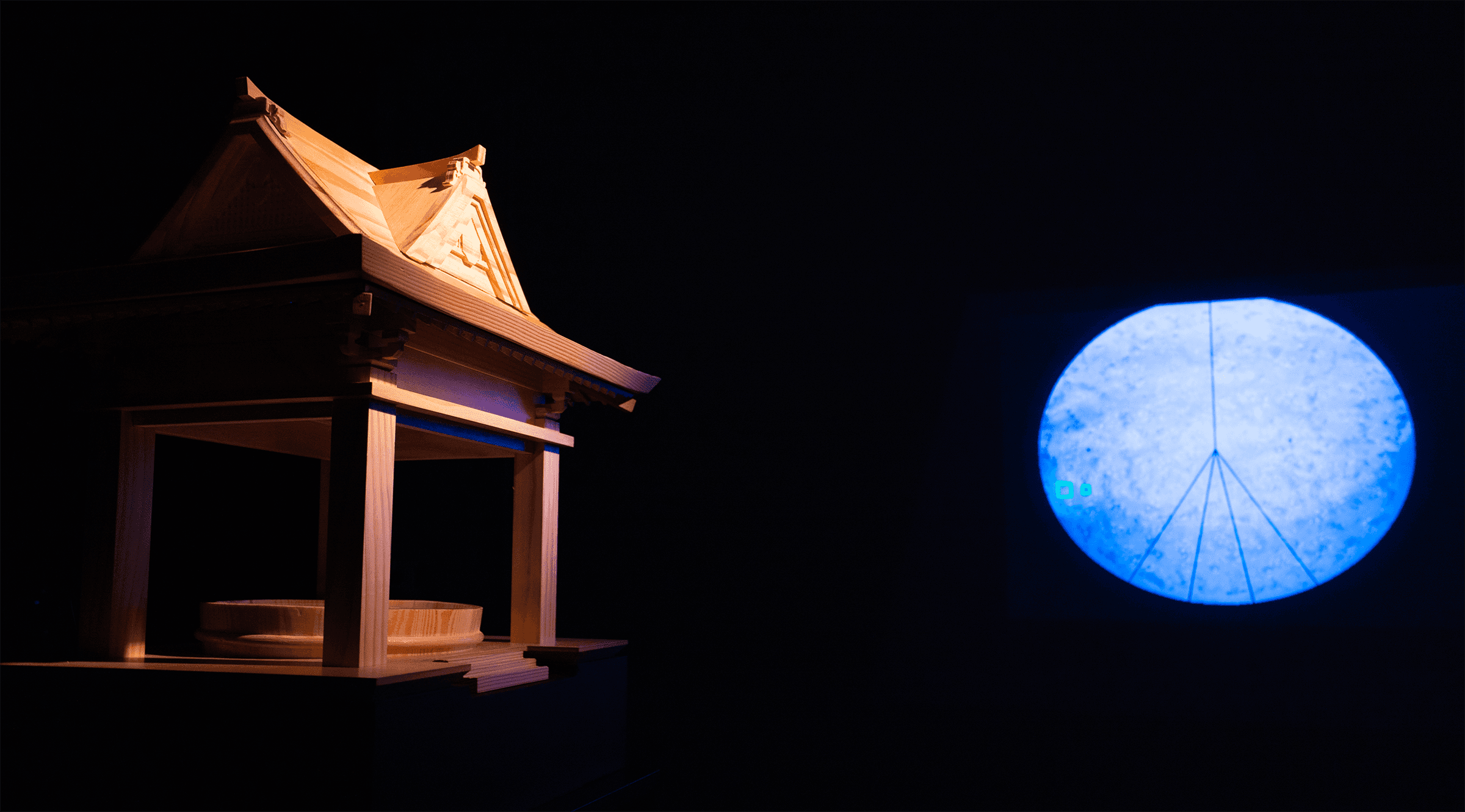
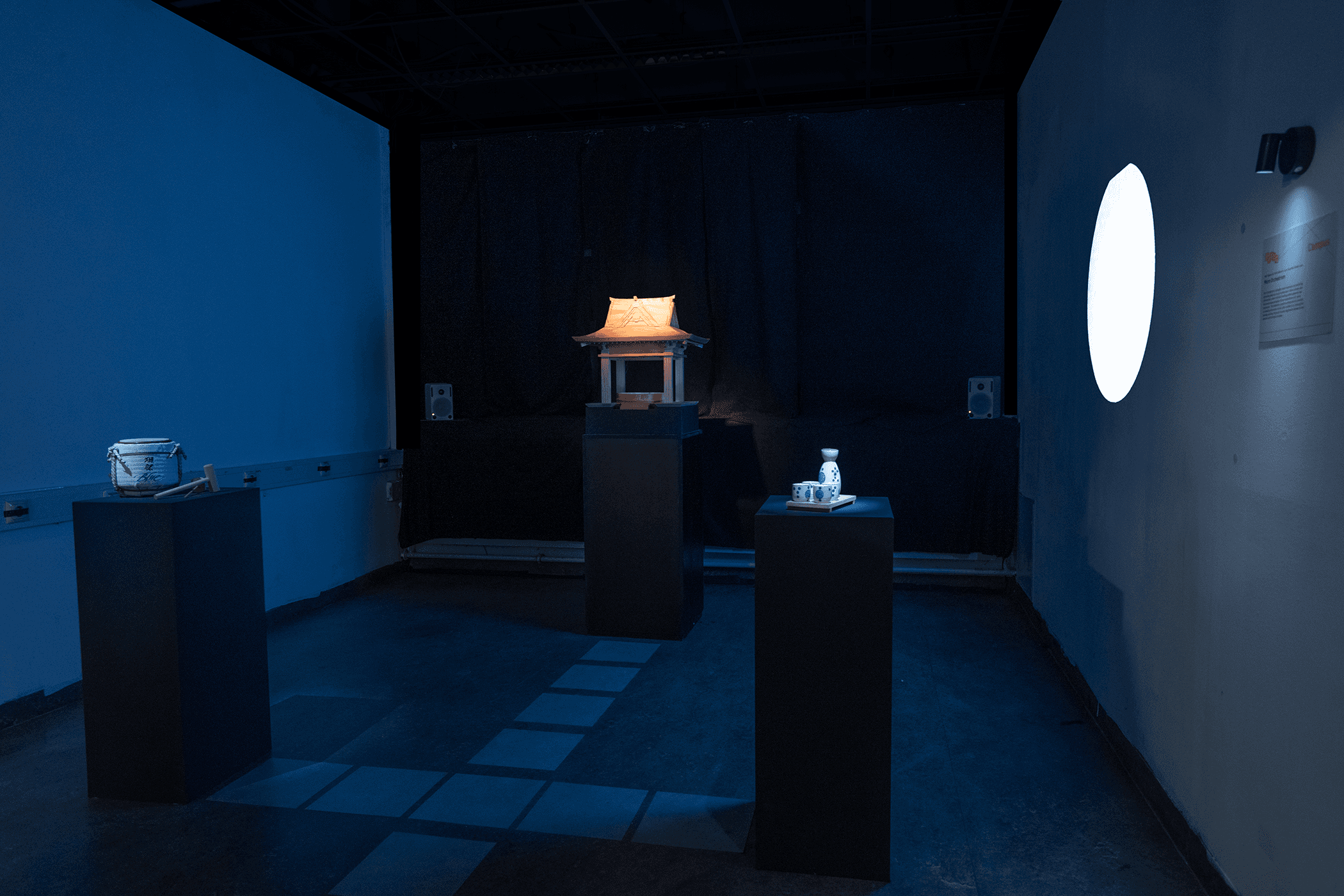
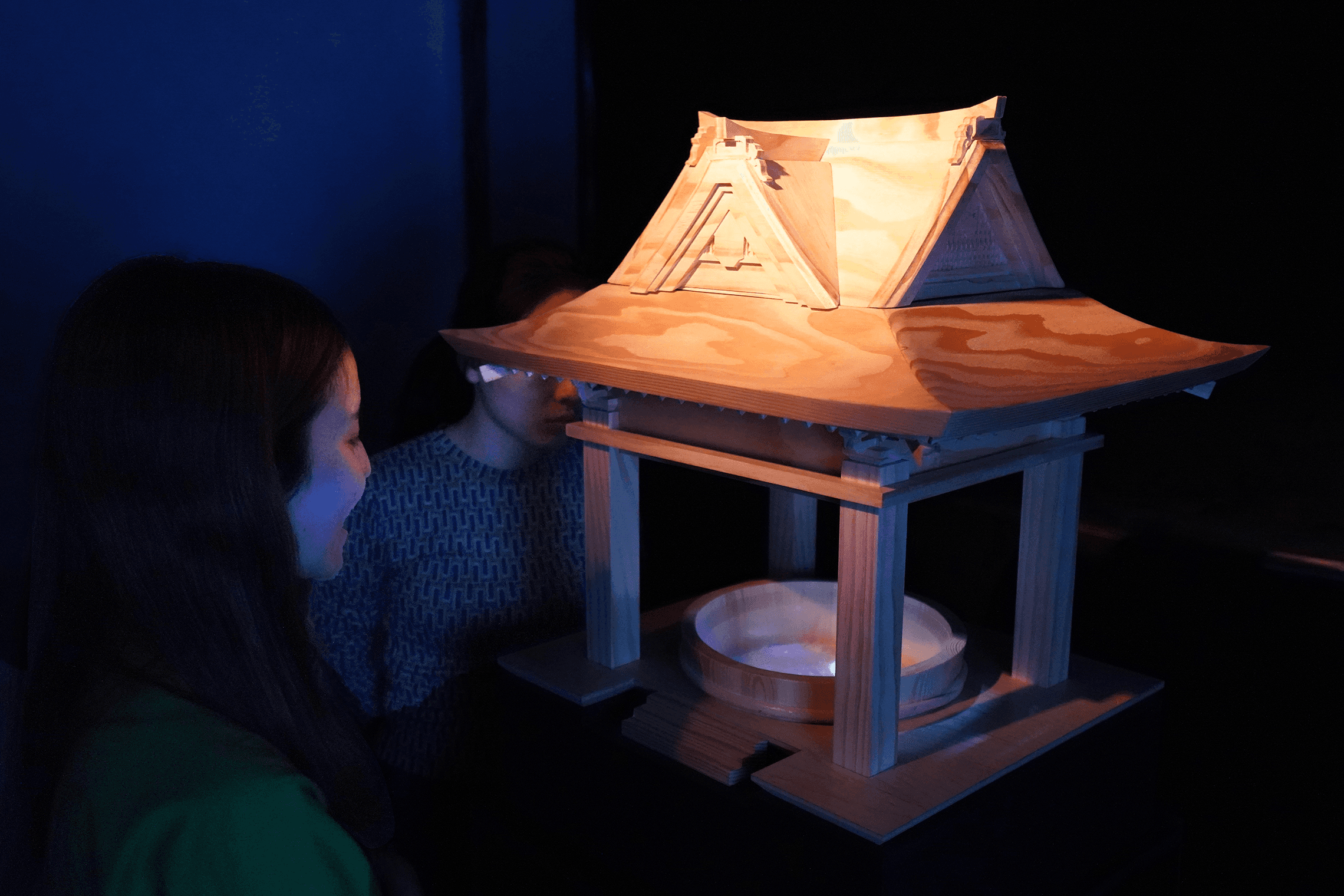
Micro Orchestrism is an audiovisual installation that questions traditional hierarchies of creative expression by positioning fermenting yeasts as musical collaborators.
Visitors witness fermentation of sake, Japanese alcohol, where microbial breathing patterns generate real-time soundscapes alongside human compositions with natural-material instruments. The installation questions anthropocentric creativity by revealing microscopic activity often invisible to us. Drawing from experimental sake brewers who incorporate musical elements into their practice, the project exposes negotiations between human intention and microbial processes.
How it works
Microbial layer
Human layer

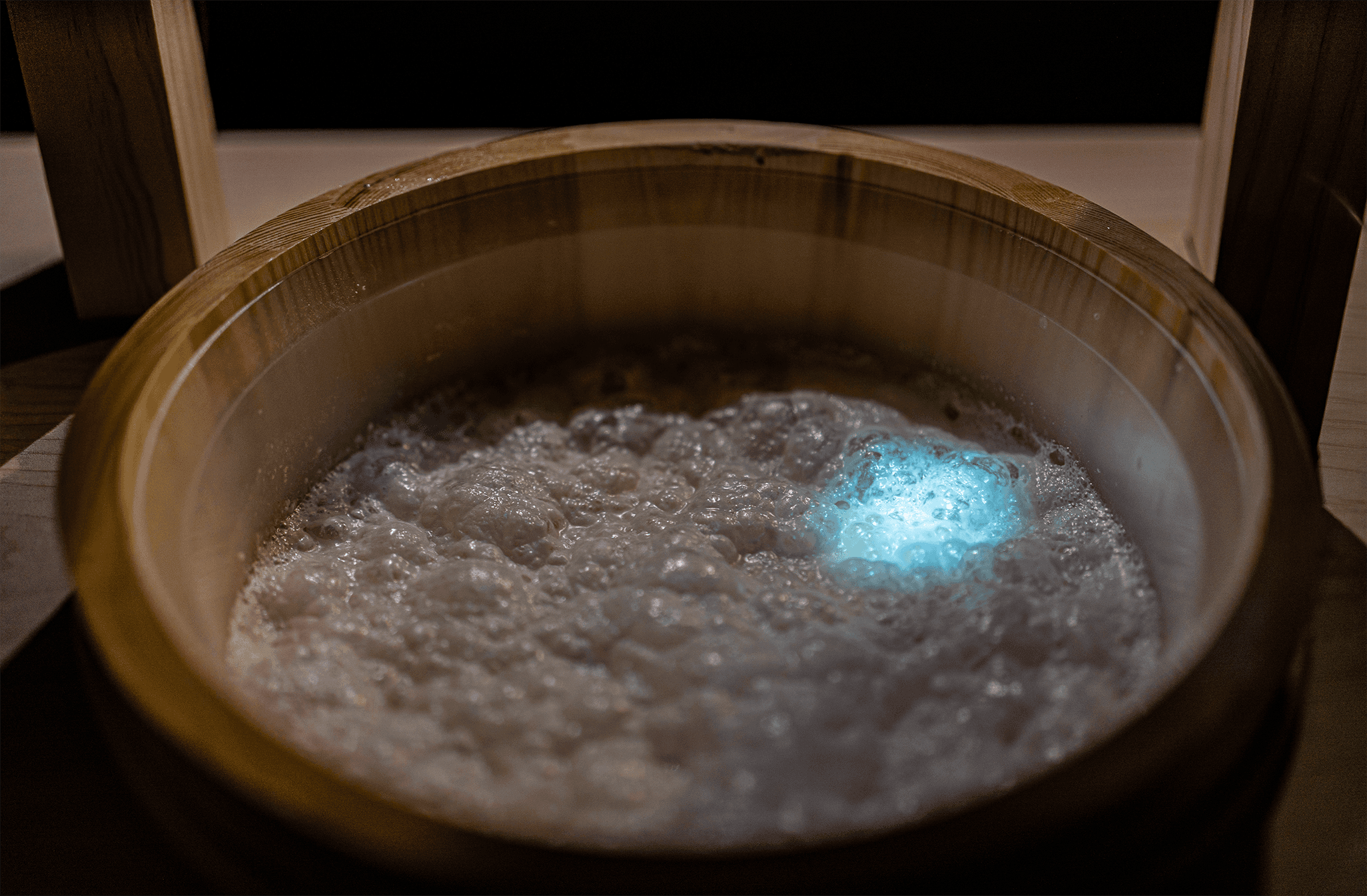
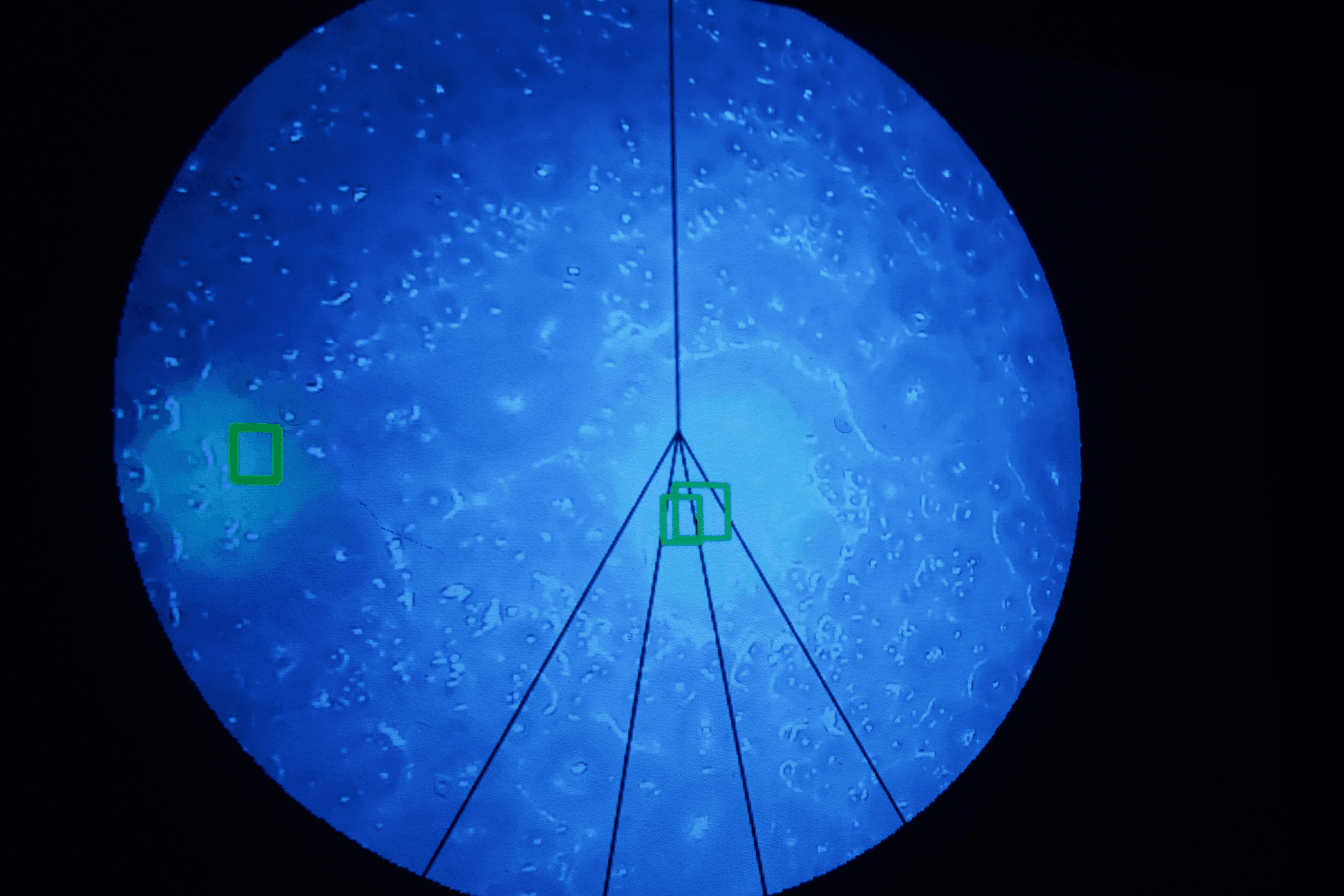
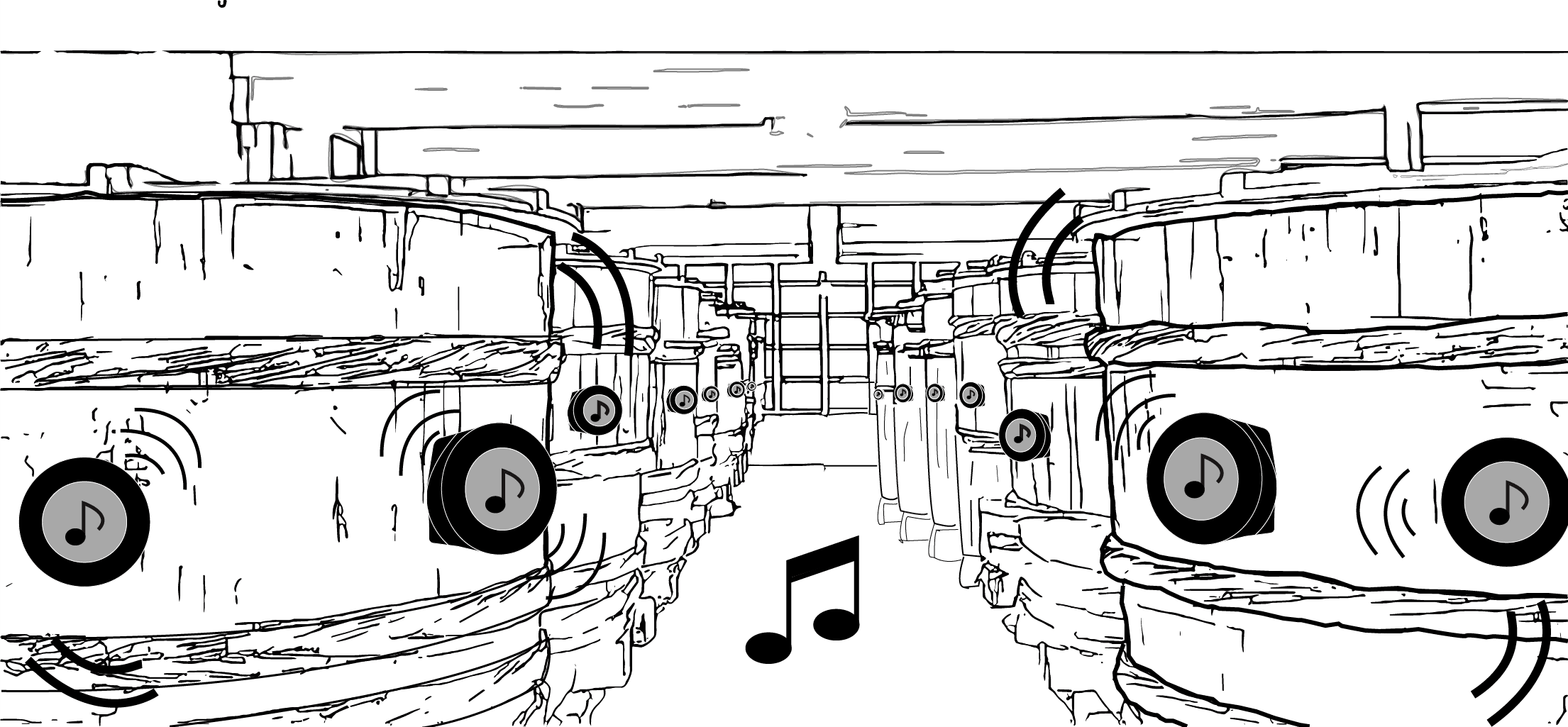
The soundscape consists of two layers: a pre-recorded human layer and a microbial layer generated by sounds triggered from the movement of bubbles—the visible traces of microbial respiration. Together, these two layers form an evolving soundscape that unfolds over the course of the exhibition. The music draws from gagaku, Japan’s ancient court music that has retained its form for over fourteen centuries. The type of instrument played by the microbes varies according to the location of the captured bubbles, following the traditional seating arrangement of gagaku performers.
Bubble movements are detected
2
Bubbles are filtered based on specific conditions
3
Spotlights are cast on selected bubbles
4


Simultaneously with the lights, sounds of specific instruments are played.
Process / Details
Inspiration - Music Fermentation
Music Fermentation: Getting inspired by the story of experimental Japanese sake brewers who use musical elements into their practice, this work imagines: "What if we used music to explore our co-creative relationship with microorganisms?"
Initial research - Interview
Potential uniqueness in attitudes towards microorganisms in East Asian culture.
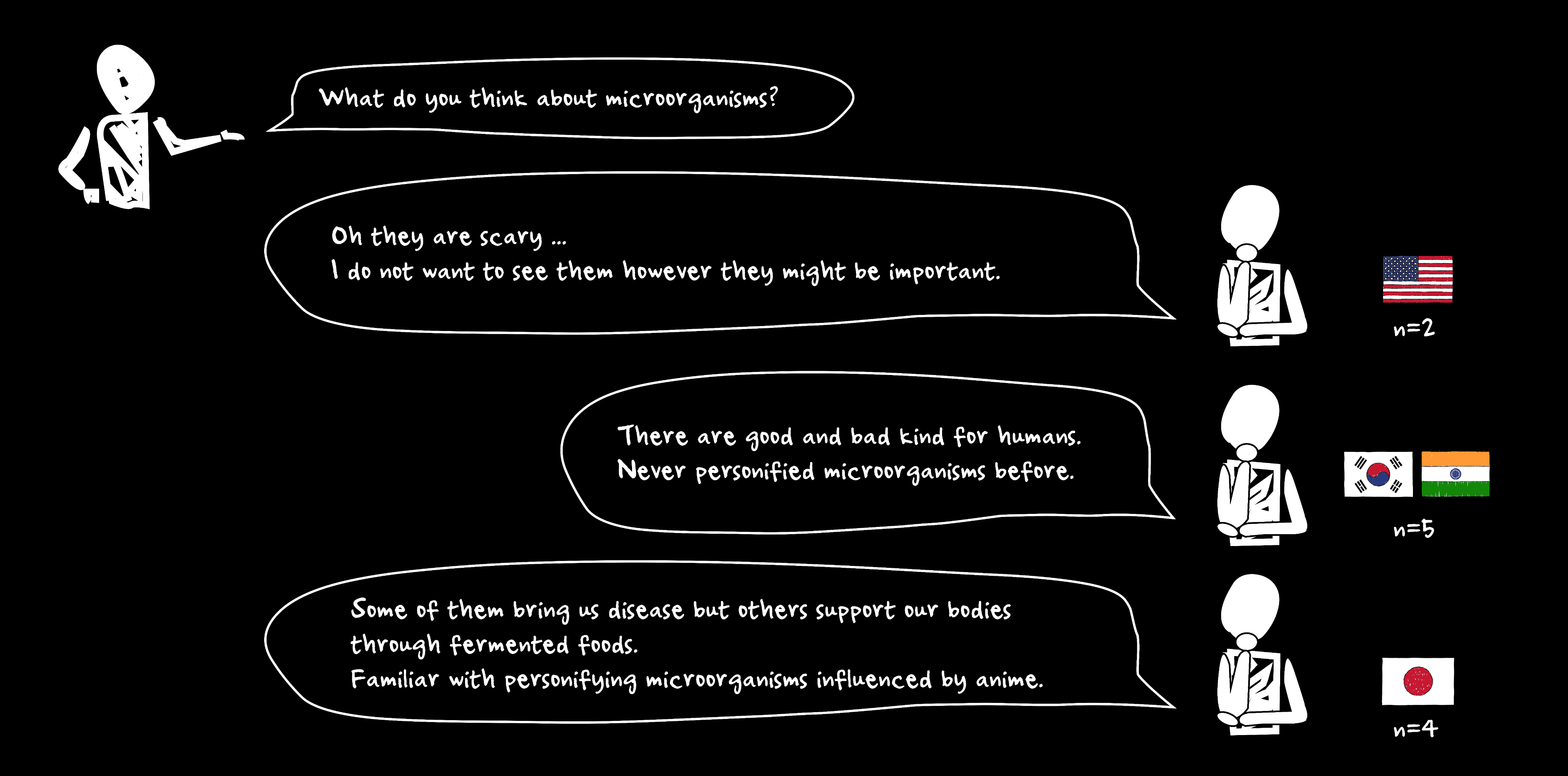
Field visit to sake breweries
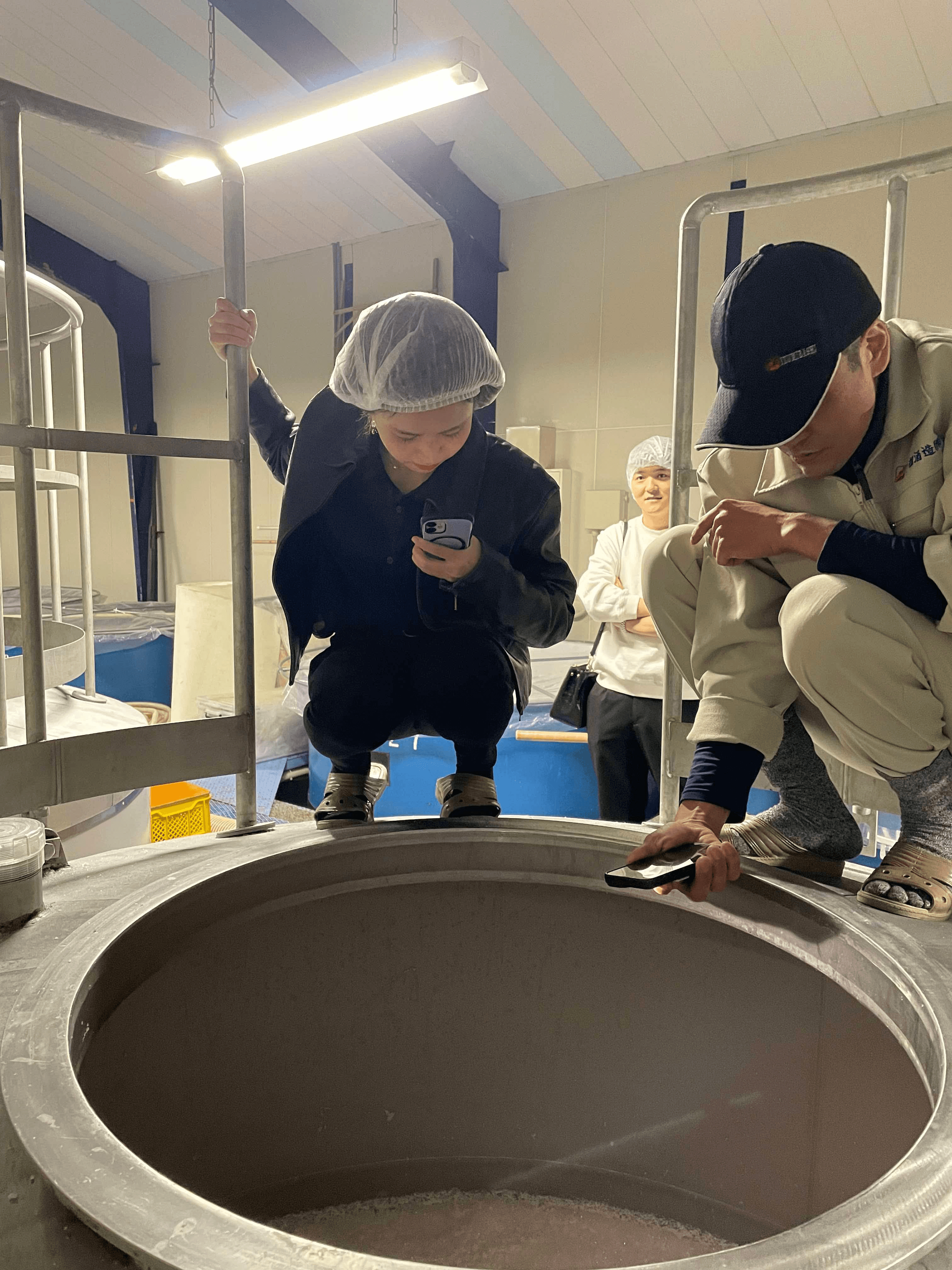
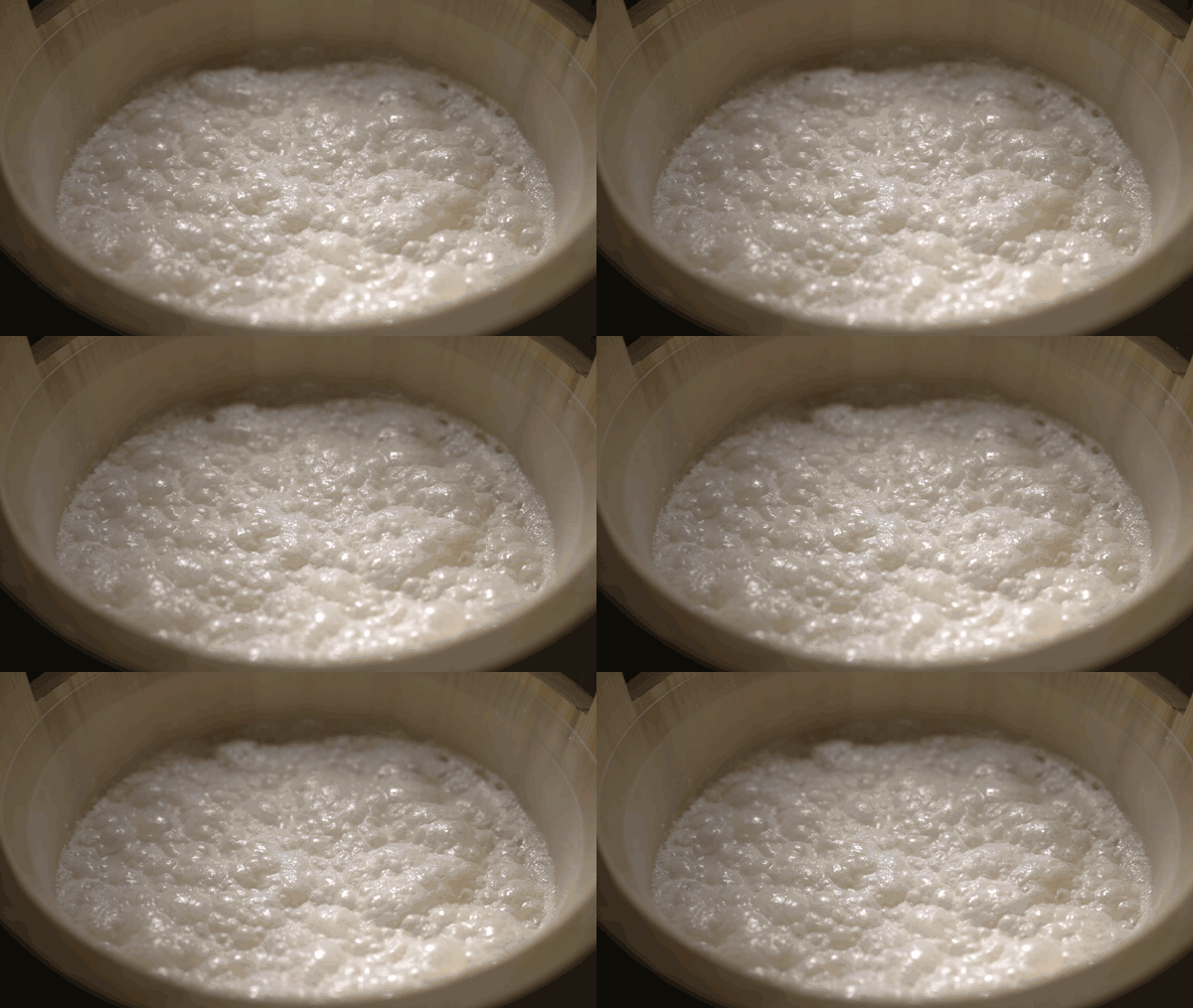
I visited several sake breweries in Japan and in the United States, then found the uniqueness in the Japanese brewers attitudes shown below, and developed the concept based on them.
"We use our five senses to explore how we can help koji mold ― the microbes that initiate sake fermentation- live comfortably"
"If abnormal smells drifts through the room, we ask ourselves how the koji might be feeling and then take steps to address the issue"
"It's important to respect the boundary between humans and microbes"
"Although we can guide them to create a specific sake taste, it's microbes that decide the final taste"
"We do our part, and then hand over the baton to microbes, trusting them with what comes next"
Among certain brewers, flavor is understood as the creative output of microbes. Brewing thus becomes a negotiation: between the managerial drive for consistent quality and a reverent willingness to work with living agents who resist total control. Micro Orchestrism stages these frictions and affinities between nonhuman processes and human making as a form of co-composition.
Interpreting bubbles as an essential yeast's body languages
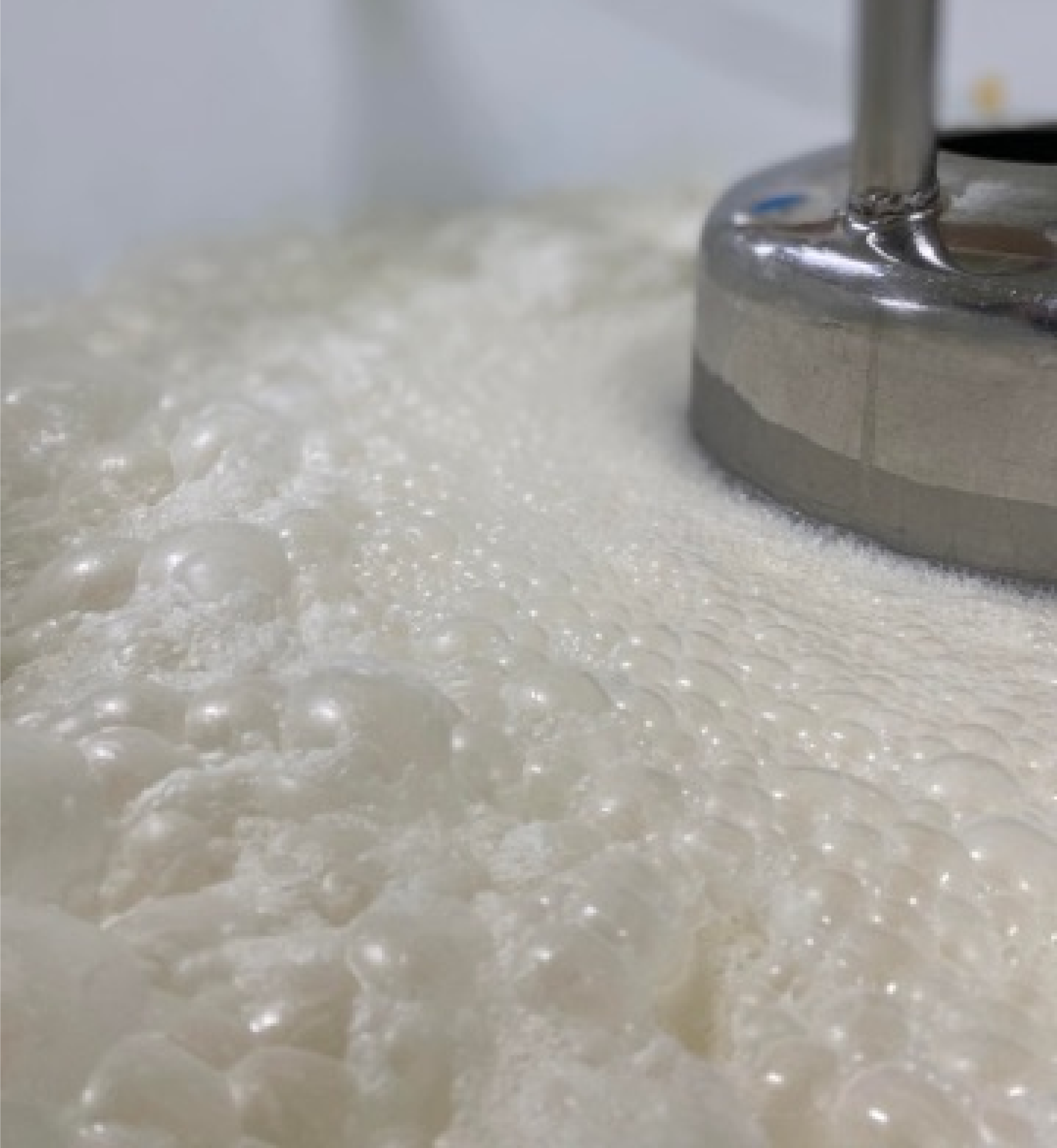
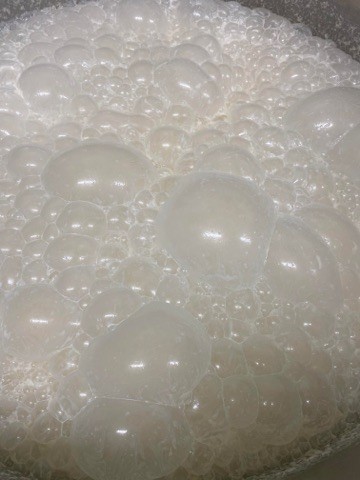
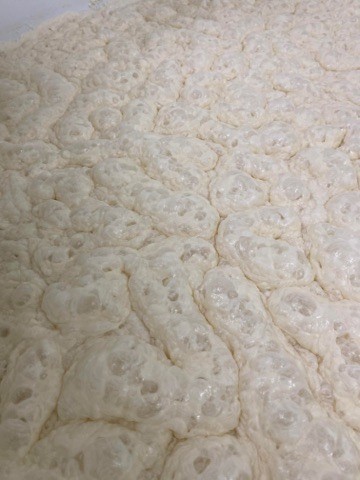
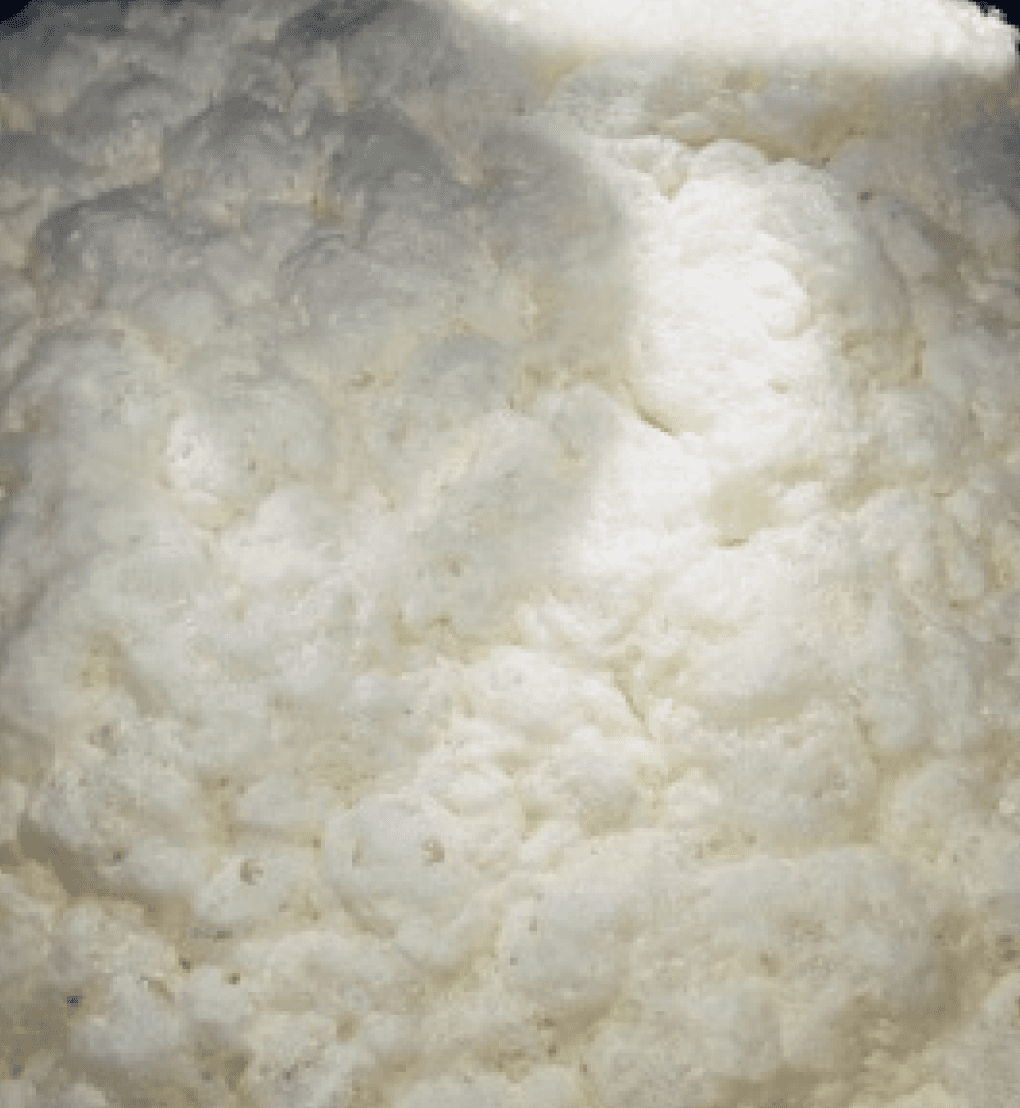

Sake brewing is a collaborative creative practice between humans and yeast, where an ethic of care toward microorganisms endures.
The flavor of sake springs from a creative dialogue: brewers engage their five senses to guide the process, and yeasts respond by crafting taste based on that carefully tuned environment. Brewers already "read" fermentation by watching bubbles—each one a tiny breath from the yeast. It is both an act of caring another form of life and an attempt to control it. Yet, microorganisms cannot be fully controlled; making good sake requires a sustained "dialogue" between brewer and yeast.
The work translates this charged relation into sound—a co-composed music of humans and fermenting yeast.
Situating gagaku music in interplay with nonhuman nature

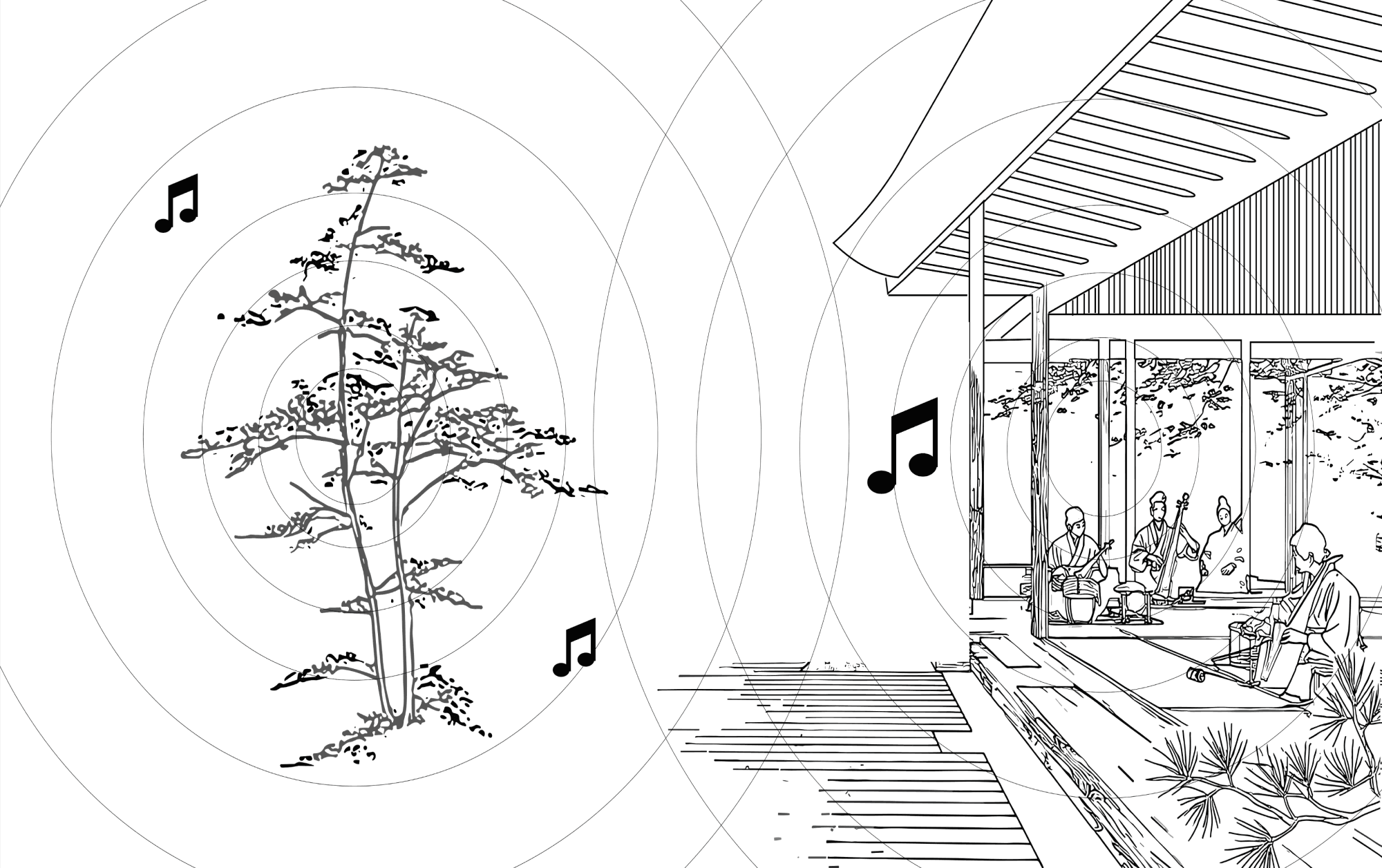
Gagaku is a Japan's ancient court music whose modes, performance practice, and natural-material instruments have remained remarkably almost continuous for over fourteen centuries.
Gagaku instruments are made from natural materials and are characterized by timbres rich in noise and overtones—qualities abundant in the sounds of nature.
One facet of gagaku—often performed outdoors—is its openness to contingency: sounds of nature such as pine breeze and river murmurs can be folded into its beauty. It can also be read as music that finds beauty in overtones and roughness native to natural sound, aspiring to a becoming-with nature.
In this respect, gagaku may be understood—again like brewing—as a more-than-human practice: music woven with weather, breath, and incident, in which beauty is achieved through the negotiated interplay of human intention and nonhuman agency.
Credits
Micro Orchestrim by Kaori Ogawa (Overall Concept, Visual Design, System Deisgn and Programming), developed in collaboration with Kaito Nakahori (Musical Composition) and Harpreet Sareen (Conceptual Feedback, Technical Architecture, Editorial Collab)
Acknowledgements
Materials support: Synthetic Ecosystem Lab, Parsons School of Design, DASSAI USA, Inc.
Fabrication support: Kohei Takegawa
Photo credits: Ken James Kubota
Sake brewing advice: Brooklyn Kura, Izumibashi Sake Brewery Co., Ltd.
Funding support: The New School - Student Research Awards 2025